

Teen Dating Violence

Every Teen Deserves a Healthy Relationship
Teen dating violence affects millions of young people each year. It can happen in person, online, or through social media, and often goes unrecognized until serious harm has occurred.
If you or someone you know is in immediate danger, call 911.
Need help now?
Illinois Domestic Violence Hotline
Call or text 24/7 877-863-6338 (877-To-End-DV)
Call: 1-866-331-9474
Text: LOVEIS to 22522
What Is Teen Dating Violence?
Teen dating violence is a pattern of behaviors used by one person to gain power and control over a dating partner. It can occur in casual or serious relationships and affects people of all genders, sexual orientations, backgrounds, and communities.
Teen dating violence is an unfortunately common experience.
The national 2021 youth Risk Behavior Survey found that nationally:
1 in 12 (8.3%) high school students report experiencing physical dating violence
1 in 10 (10%) high school students report experiencing sexual dating violence
The 2023 Youth Risk Behavior Survey from Chicago Public Schools found that:
11.8% of high school students reported experiencing dating violence in the past year
9.7% reported experiencing sexual dating violence
The consequences of teen dating violence are profound and far-reaching, including:
– decreased school attendance and academic achievement
– increased anxiety, depression, and self-harm risk
– greater likelihood of substance misuse
– isolation from friends and family
– increased risk of victimization in adulthood
Understanding Teen Dating Violence
Types of Abuse
Emotional Abuse
Insults and put-downs
Constant criticism
Humiliation
Threats or intimidation
Physical Abuse
Hittin, pushing, grabbing, or restraining
Throwing objects
Damaging property
Sexual Abuse
Unwanted touching
Pressuring someone into sexual activity
Sharing intimate images without consent
Pressuring for nude/lewd photos
Sabotaging safer sex/birth control
Digital Abuse
Demanding passwords
Tracking locations
Monitoring texts and social media
Excessive messaging and harassment
Financial Abuse
Controlling money
Stealing from a partner
Creating financial dependence
Stalking
Following in person
Tracking locations through social media or phone
Having someone else follow their partner
Showing up unannounced and home, work, or school
Healthy vs. Unhealthy Relationships
Healthy Relationships Include
Respect
Trust
Honest communication
Independence
Boundaries
Support for personal goals
Warning Signs of Abuse
Extreme jealousy
Constant texting or checking up
Isolating someone from friends and family
Monitoring social media activity
Threats or intimidation
Pressuring sexual activity
Blaming others for abusive behavior
Understanding the Cycle of Violence
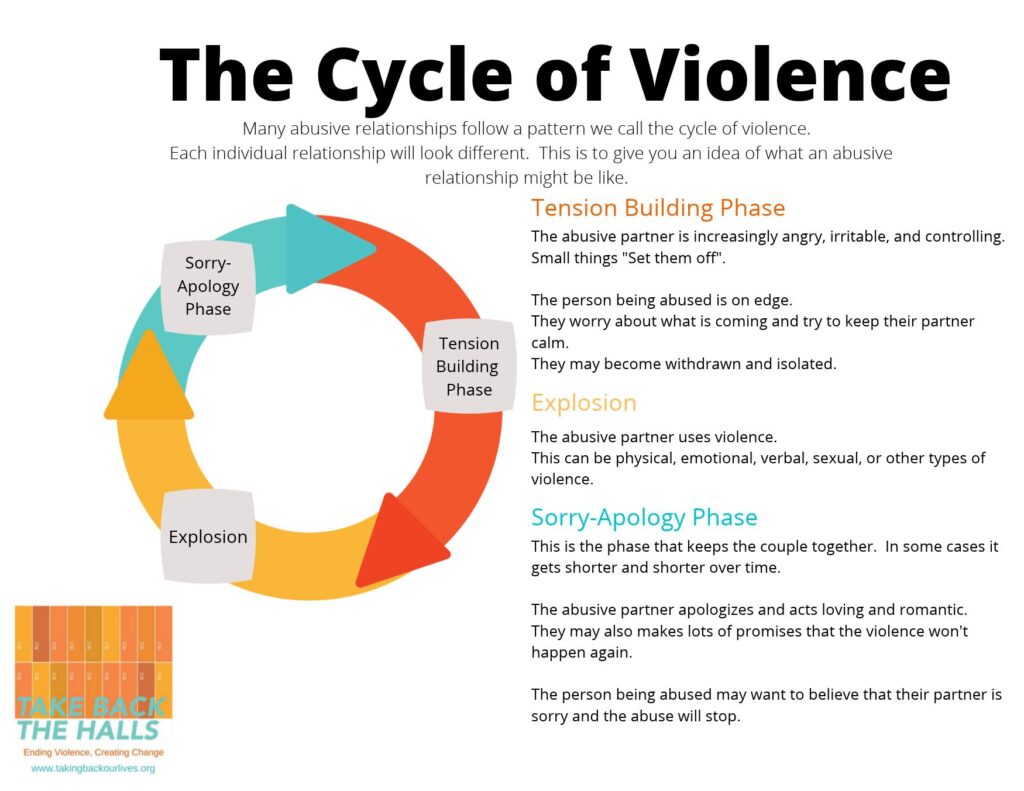
Abusive relationships often follow a pattern known as the Cycle of Violence. While every relationship is different, abuse can happen in a repeating cycle of three phases: tension building, explosion, and apology.
During the Tension Building Phase, the abusive partner may become increasingly angry, irritable, jealous, or controlling. The person being abused may feel like they are walking on eggshells, trying to avoid conflict or keep their partner happy.
During the Explosion Phase, the abuse occurs. It may be physical, emotional, verbal, sexual, or another form of harmful behavior.
During the Sorry-Apology Phase, the abusive partner may apologize, act loving and affectionate, and promise that it will never happen again. The person being abused may want to believe things will change and that the abuse is over.
Over time, this cycle may repeat. The tension and abuse may become more frequent, while the apologies and periods of affection may become shorter.
It’s important to remember: Apologies, promises, and loving moments do not erase abuse. The sorry apology phase can keep survivors in relationships hoping that things will get better and their partner will change. You are not responsible for your partner’s abusive behavior, and you do not have to wait for the cycle to repeat before seeking help.
Not all abusive relationships follow this pattern.
For Teens
What To Do If You Are Being Abused
– Tell a trusted adult.
– Document threatening messages.
– Create a safety plan.
– Reach out to support services.
Remember: Abuse is never acceptable.
Safety Planning
– Keep emergency contacts accessible.
– Identify safe places to go.
– Share concerns with trusted friends or adults.
– Block abusive contacts when safe to do so.
For Parents and Caregivers
Signs Your Teen May Be Experiencing Abuse
– Sudden withdrawal from friends
– Anxiety or depression
– Unexplained injuries
– Excessive monitoring by a dating partner
– Declining academic performance
– Listen without judgment.
– Believe your child.
– Avoid criticizing the partner initially.
– Focus on safety.
– Seek professional support when needed.
For Educators
Creating Safe Schools
Schools play a critical role in prevention and intervention.
Best Practices
– Provide healthy relationship education to all students.
– Train staff to recognize warning signs.
– Establish reporting procedures.
– Support student-led awareness initiatives.
– Partner with community organizations.
Ending an Abusive Dating Relationship
Leaving an abusive relationship can be scary. You might worry about how your partner will react, what they might do, or what will happen afterward. You might still care about them, even though they are hurting you. All of those feelings are normal.
But remember: You deserve to feel safe, respected, and in control of your own life. Abuse is never your fault, and you do not have to stay in a relationship that hurts you.
Ending an abusive relationship can sometimes increase the risk of harm, so it’s important to think about your safety before making a move. You don’t have to figure everything out on your own. Here are some steps that can help.
Talk to Someone You Trust
You don’t have to go through this alone. Reach out to a trusted adult who can help you make a plan. This might be a parent, family member, school counselor, teacher, coach, or another adult you feel comfortable with.
Tell them what has been happening and why you’re worried about ending the relationship. Be honest about any threats, physical violence, stalking, or controlling behavior. Ask them to help you figure out how to stay safe.
If the first person you talk to doesn’t listen or understand, keep reaching out until you find someone who will.
Make a Safety Plan Before You Break Up
Think about what could happen when your partner finds out you want to end the relationship. Have a plan for where you will go and who you can contact if things become unsafe.
Consider:
– Who can be with you or check on you when you end the relationship?
– Where can you go if you don’t feel safe at home, school, or somewhere else?
– Who can you call if your partner threatens or follows you?
– How will you get to and from school or activities safely?
– Are there friends, teachers, or other trusted adults who can help you avoid being alone with your ex?
If your partner has threatened you, hurt you, stalked you, or made you afraid of what they might do, get help from a trusted adult or dating abuse advocate before ending the relationship.
You Do NOT Have to Break Up in Person
There is a lot of pressure to break up face-to-face, but your safety comes first. If you are afraid of how your partner might react, it is okay to end the relationship by text, phone, or another way that feels safer.
You do not owe your partner an in-person conversation, a long explanation, or another chance. You can keep your message short and clear.
For example:
“I’m ending this relationship. I don’t feel safe or happy, and my decision is final. Please don’t contact me anymore.”
If you think sending a message could put you in danger, talk with a trusted adult or advocate about the safest way to handle it.
Protect Yourself at School and Online
Even after a relationship ends, an abusive partner may continue trying to contact, control, or intimidate you.
Think about ways to protect yourself:
– Let a school counselor, teacher, or administrator know what is happening so they can help you stay safe at school.
– Arrange to walk with friends between classes and avoid being alone with your ex.
– Block your ex on your phone and social media if it is safe to do so.
– Change your passwords and turn off location sharing if your ex has access to your accounts or location.
– Check your privacy settings and be careful about sharing where you are or what you are doing.
– Ask friends not to share your location, photos, or information about you with your ex.
– Save threatening messages, emails, or screenshots somewhere your ex cannot access.
If you think your phone or accounts are being monitored, use a trusted person’s device to get help. Be careful about making changes that might alert your ex or increase the danger.
Take Threats Seriously
Sometimes an abusive partner will threaten to hurt you, themselves, your friends, or someone in your family if you leave. They may say they will change, promise it will never happen again, or make you feel guilty for ending the relationship.
These threats are not your responsibility to manage. You are not responsible for staying in a relationship to keep someone else from hurting themselves or someone else.
Tell a trusted adult about any threats. If someone is in immediate danger, call 911.
Give Yourself Time to Heal
Ending an abusive relationship isn’t always easy, even when you know it’s the right decision. You might miss your ex, feel sad, question your decision, or wonder if things could have been different.
You might also feel relieved, angry, confused, or a combination of emotions. That’s okay.
Spend time with people who make you feel supported. Do things you enjoy. Talk to someone when you need to. Healing takes time, and you don’t have to rush it.
Remember: You deserve a relationship where you feel safe, valued, and respected. You are allowed to walk away from someone who hurts you. Choosing your safety is never selfish.
Need Help? You Don’t Have to Figure This Out Alone.
Love Is Respect and the offers free, confidential support for teens and young adults who have questions about dating abuse or need help making a safety plan.
Call: 1-866-331-9474
Text: LOVEIS to 22522
Advocates are available 24/7. You can reach out even if you’re not sure whether your relationship is abusive or you’re not ready to leave.
If you are in immediate danger, call 911.