

23 Oct What Happens When “Boys Don’t Cry”?
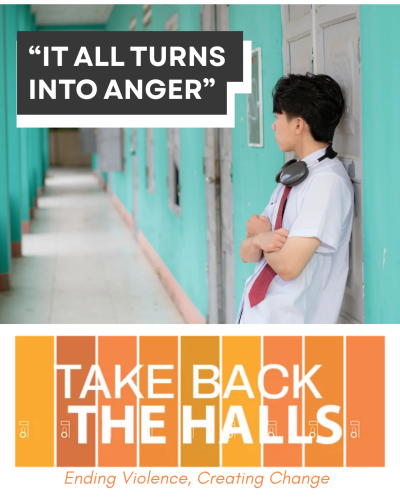
“It all turns into anger.”
An eighth-grade boy said these words quietly and seriously during a conversation about healthy dating relationships. His male classmates nodded in agreement.
We were in an 8th grade classroom this week, leading a small group activity with Take Back the Halls. A group of boys told me they would never cry in front of their girlfriend. When I asked why, they explained that crying would make them look weak. Men don’t cry.
So I asked them: What happens when you’re not allowed to express all your feelings?
That’s when one boy put into words a truth a truth we see play out far too often:
“It all turns into anger.”
This is a conversation we have regularly at Take Back the Halls. Last year, two eighth-grade girls told us they had joined our youth leadership group because they wanted to help their brothers, who had been taught that they shouldn’t have feelings.
Think about that for a moment. Young people are recognizing the harm of these messages and stepping up to challenge them, not just for themselves, but for the people they love.
This is the heart of Take Back the Halls.
We create spaces where young people can talk honestly about their lived experiences, ask difficult questions, challenge what they’ve been taught, and discover new ways of understanding themselves and one another.
Did one 60-minute lesson undo 13 years of socialization for those four boys? Of course not.
But it gave them an opportunity to question a message they had absorbed for years. Together, they began to explore what happens when people are taught to hide their emotions rather than understand and express them.
That matters.
Sadness is a fundamental part of being human. Life can be painful, sometimes overwhelmingly so. Teaching boys that sadness is unacceptable doesn’t make those feelings disappear. It can leave them without the language, skills, or support they need to process what they’re experiencing. As those eighth graders recognized, unexpressed sadness can become anger.
And when young people lack healthy ways to understand and manage their emotions, that anger can contribute to harm directed at themselves or others.
Preventing violence means more than teaching young people what not to do. It means helping them build the skills and relationships that make healthier choices possible.
Social-emotional learning is central to our work at Take Back the Halls. We help students identify what they’re feeling, recognize when emotions become overwhelming, and learn and practice strategies for coping and calming themselves. Just as importantly, we create classroom communities where young people of every gender can experience and express the full range of human emotions without shame or judgement.
Because healthy relationships require emotional honesty. Because consent and respect begin with understanding ourselves and others. And because we cannot build safer schools and communities while teaching young people that vulnerability is weakness.
We may not change a lifetime of socialization in one class. But we can create moments that open the door to something different. We can help young people question harmful expectations, practice new skills, and imagine healthier ways of relating to one another.
Sometimes, change begins with a simple question, and the courage to give an honest answer.
What are you doing to help the boys in your life recognize, understand, and express the full range of human emotions?
For resources and information on healthy masculinity, check out A Call to Men.
Sorry, the comment form is closed at this time.